
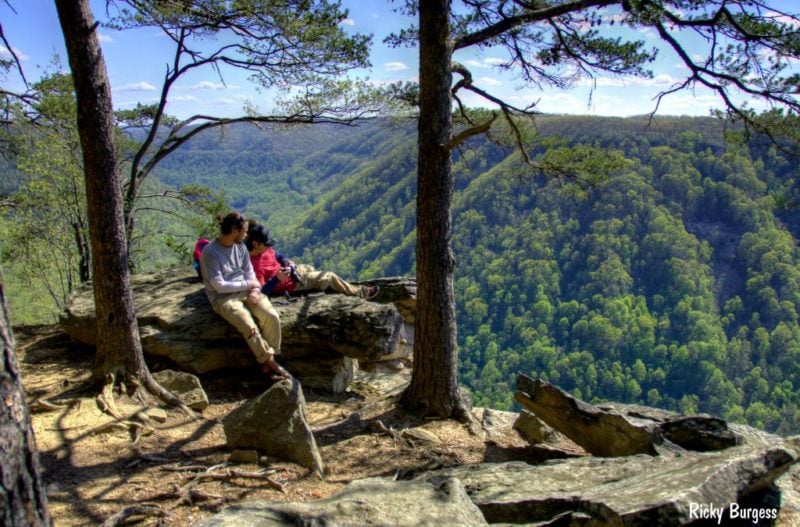
Hiking is among the most popular outdoor recreational activities in West Virginia, a state renowned for its rugged mountains, extensive forests, deep river gorges, and scenic public lands. Thousands of miles of hiking trails traverse the state’s mountains, offering opportunities from short nature walks and rail-trail excursions to strenuous wilderness treks and long-distance backpacking routes.
Hiking destinations are found throughout West Virginia’s state parks, state forests, wildlife management areas, national forests, and national park lands. West Virginia’s varied topography and abundant public lands have made it a premier hiking destination in the central Appalachian region.

The state’s hiking culture developed alongside the conservation movement of the late nineteenth and early twentieth centuries. As timber companies abandoned large tracts of cutover land, state and federal agencies acquired many areas for reforestation and public recreation.
The establishment of the Monongahela National Forest in 1920 and the subsequent creation of numerous state parks and forests laid the foundation for an extensive trail system that continues to expand. Today, West Virginia’s public lands contain more than 1,400 miles of designated hiking trails, with additional routes along rail trails, wilderness paths, and long-distance footways.
Major Hiking Regions
The most extensive hiking opportunities are found in the Monongahela National Forest, which spans nearly one million acres in eastern West Virginia. The forest contains hundreds of miles of trails, including routes through the Dolly Sods Wilderness, Cranberry Wilderness, Otter Creek Wilderness, and the Spruce Knob–Seneca Rocks National Recreation Area. Hiking experiences range from short interpretive walks to multi-day backcountry expeditions through some of the most remote landscapes in the Appalachian Mountains.

Another major destination is the New River Gorge region of southern West Virginia. Following the area’s designation as a national park and preserve, interest in hiking increased significantly. Trails within the gorge lead to river overlooks, sandstone cliffs, historic mining communities, waterfalls, and forested ridges. Popular routes include the Endless Wall Trail, Long Point Trail, Glade Creek Trail, and numerous paths connecting scenic overlooks along the canyon rim.
The Potomac Highlands region also attracts hikers with destinations such as Seneca Rocks, North Fork Mountain, Canaan Valley, Blackwater Falls, and Dolly Sods. Many of these areas feature high-elevation plateaus, sweeping mountain vistas, and ecosystems uncommon elsewhere in the eastern United States.
Long-Distance Trails
Several long-distance hiking routes cross West Virginia. The Appalachian Trail passes through the state’s Eastern Panhandle for about twenty miles, crossing the Potomac River at Harpers Ferry before continuing northeast. Harpers Ferry is widely regarded as the symbolic midpoint of the trail and an important destination for long-distance hikers.

The Allegheny Trail, West Virginia’s longest hiking trail, extends more than 300 miles through the mountains of eastern West Virginia. Developed and maintained by volunteers, the trail connects numerous public lands, including state forests and sections of the Monongahela National Forest. Portions of the trail overlap with other hiking systems, offering opportunities for extended backpacking excursions.
Rail-trails also contribute significantly to the state’s hiking opportunities. Notable examples include the Greenbrier River Trail, the North Bend Rail Trail, and the Elk River Trail. These former railroad corridors offer relatively gentle grades and are especially popular among families, cyclists, and long-distance walkers. The Greenbrier River Trail extends approximately 78 miles through Pocahontas and Greenbrier counties and is considered one of the state’s most celebrated hiking routes.
State Parks and Forests
Nearly every West Virginia state park and state forest has hiking trails. Popular destinations include Blackwater Falls State Park, Babcock State Park, Pipestem Resort State Park, Watoga State Park, Audra State Park, Coopers Rock State Forest, Greenbrier State Forest, and Seneca State Forest.
Trail systems range from short interpretive loops and waterfall walks to challenging mountain climbs and wilderness routes. State forests often offer some of the state’s most secluded hiking experiences, with extensive trail networks through undeveloped woodlands.
Seasonal Hiking in West Virginia
Hiking is a year-round activity in West Virginia. Spring brings wildflower displays and waterfalls, while summer offers access to high-elevation forests and mountain streams. Autumn is especially popular for the state’s extensive fall foliage, which draws visitors from across the eastern United States. Winter hiking is common at higher elevations, where snow-covered landscapes create opportunities for snowshoeing and other cold-weather recreation. Seasonal conditions can vary considerably because of the state’s mountainous terrain and changing weather patterns.
Conservation and Trail Stewardship
Most hiking trails in West Virginia are maintained through partnerships among federal and state agencies, nonprofit organizations, and volunteers. Groups such as local trail associations, hiking clubs, and conservation organizations contribute to trail construction, maintenance, and environmental stewardship. The Mountaineer Trail Network is the state’s largest independent trail stewardship group.
Many public land managers encourage hikers to follow Leave No Trace principles to minimize impacts on natural resources and preserve the state’s outdoor heritage for future generations. Public access remains a significant factor in trail development, as much of West Virginia’s land is privately owned.
Best Hiking Trails in West Virginia
West Virginia is home to hundreds of hiking trails, from short walks to scenic overlooks and waterfalls, to challenging backcountry routes through some of the most rugged terrain in the Appalachian Mountains. While hiking opportunities exist throughout the state, several trails are especially well known for their natural beauty, unique landscapes, and recreational significance. These routes showcase many of the features that distinguish West Virginia’s outdoor heritage, including high mountain plateaus, deep river gorges, dense forests, and expansive vistas.
Among the state’s most celebrated trails are the Endless Wall Trail and Long Point Trail in the New River Gorge, the Bear Rocks Trail and other routes within the Dolly Sods Wilderness, the North Fork Mountain Trail in the Potomac Highlands, and the Seneca Creek Trail near Spruce Knob.
Other notable hiking destinations include the Raven Rock Trail at Coopers Rock State Forest, the High Falls Trail in Monongahela National Forest, and the Greenbrier River Trail, one of the state’s premier rail-trails. Together, these and many other routes have helped establish West Virginia as a leading destination for hiking and backpacking in the central Appalachian region. For detailed descriptions of these and other notable routes, see Best Hiking Trails in West Virginia.
See Also
- Appalachian Trail
- Monongahela National Forest
- New River Gorge National Park and Preserve
- Best Hiking Trails in West Virginia
- Greenbrier River Trail
- Dolly Sods Wilderness
- West Virginia State Parks
- Allegheny Trail