





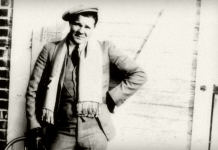
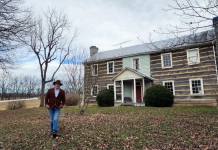
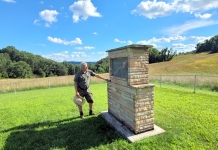
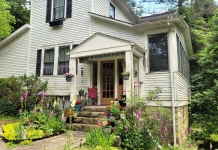



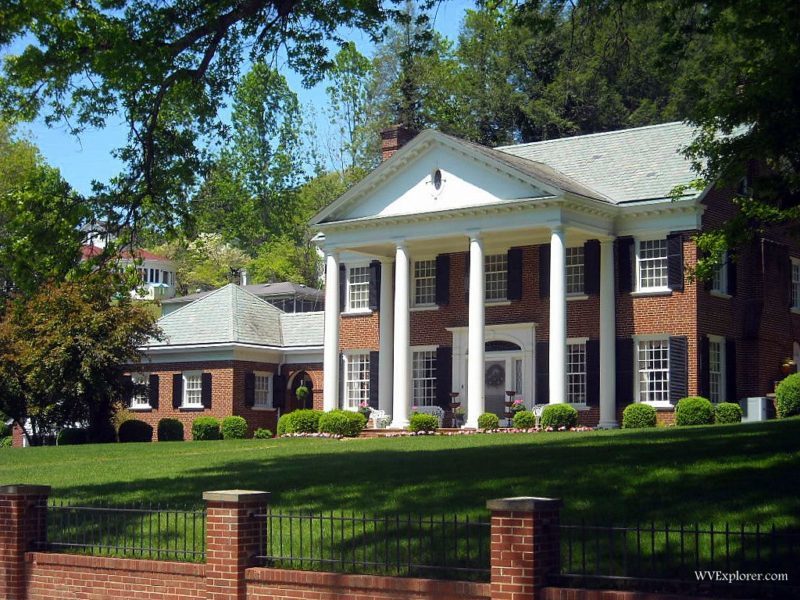
Mount Hope, WV (West Virginia), a city of approximately 1,200 residents in Fayette County in south-central West Virginia, was one of the largest commercial centers in the New River Gorge region in the 1900s. Many industrialists, educators, and civic leaders lived in the town.
Today, it may best be known as the site of The Summit Bechtel Family National Scout Reserve, which encompasses more than 10,000 acres to the north and east of the city.
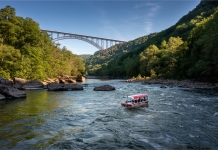
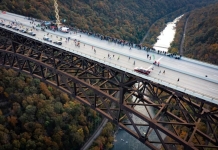
Mount Hope is also widely known as a gateway community for the central section of the New River Gorge National Park and Preserve and as a bedroom community of the City of Beckley, population 16,183, which approaches Mount Hope five miles to the south.
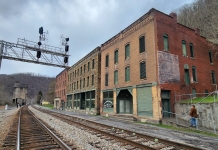
Much of the city's downtown area is located within the Mount Hope Historic District, which was established by the U.S. Department of the Interior in 2007 to preserve the architectural integrity of the city center.
Lodging near Mount Hope, West Virginia
Scout Jamboree & High Adventure Basecamp
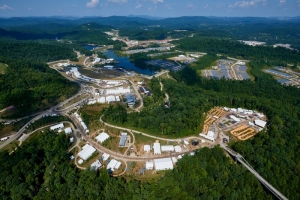
Scouting events and activities are principal draws in the Mount Hope area, which is located less than a mile east of the Summit Bechtel Family National Scout Reserve and fewer than three miles from the New River Gorge National Park and Preserve. The Summit functions as a Jamboree facility every four years. During intervening years it operates as one of the association's five national high-adventure bases. Tens of thousands of scouts and their guests visit the reserve annually.
History
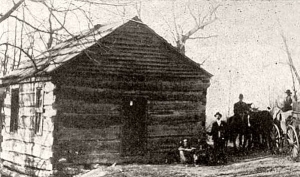
Mount Hope was named for Mount Hope School, a one-room schoolhouse situated on a hill in the upper valley of Dunloup Creek, a tributary of the New River.
William Blake, the town's first permanent settler of European ancestry, arrived in about 1805 and established an inn along a wagon road that would later become the route of the Giles, Fayette & Kanawha Turnpike. However, the area remained remote and isolated, and as late as the 1850s only three families lived in the area.
Following the completion of a branch of the Chesapeake & Ohio Railway into the area 1894, and the resulting development of the area's coal industry, the town quickly began to expand. By 1910, its population had reached 1,200, and within a radius of four miles another 5,000 people lived and twenty coal mines operated, producing coal marketed as "smokeless" from the New River Coal Field.
Although Mount Hope was not a "company town," such as others nearby owned by mining companies, mining operations literally surrounded the town. Just northeast of its limits, a mine called the "Mount Hope Mine" was operated by the Sugar Creek Coal & Coke Co., which shipped its first coal in 1898. Its operations were located at what's now the Mount Hope Municipal Stadium. To the southeast, the MacDonald Colliery Co. began shipping from its mining operation in Macdonald in 1894. To the southwest, the McKell Coal and Coke Co. operated the Kilsyth mining operation, which first shipped coal in 1902. At the present location of Mountaineer Mart in Mount Hope, Mount Hope Coal & Coke Co. operated the Baby Mine, which first shipped coal in 1908.
On March 24, 1910, the town was almost completely destroyed by a fire that consumed 40 businesses and 150 dwellings. Mount Hope was rebuilt during the years 1910-1911. Because the town rose from its ashes like the mythical Phoenix, for many years afterward the town was popularly known as The Phoenix City.
Just prior to the fire, a local real estate firm, the Warner Co., began selling lots between Mount Hope and adjacent MacDonald. This residential area became locally known as "Warnertown." During the next few years the three communities developed rapidly, to the point where the three towns were functioning as one contiguous community. As a result, Mount Hope annexed most of MacDonald and all of Warnertown in 1915.
Mount Hope had become the largest commercial center of the New River Coal Field by the mid-1910s, a distinction the town would retain until the mid-1930s. In 1915, the New River Company located its headquarters in Mount Hope. By the 1940s, the company had grown to become one of the largest coal companies in southern West Virginia, though many other mining companies headquartered in the town between 1910-1935.
Companies with headquarters in Mount Hope in 1926 included Fayette Smokeless Fuel Co., Glencoe Coal Co., Bob Coal Co., Sugar Creek Coal Co., Dartmont Coal Co., Laurel Creek Fuel Co., Pemberton Fuel Co., Long Branch Fuel Co., East Gulf Coal Co., Prince-Wick Coal Co., City Coal Co., Mount Hope Fuel Co., Sugar Creek Coal Sales, Dunn Loop Coal & Coke Co., Harvey Coal & Coke Co., Prudence Coal Co., Collins Colliery Co., White Oak Fuel Co., Cranberry Fuel Co., Beckley Coal & Coke Co., Mabscott Coal & Coke Co., Macdonald Colliery Co., Mount Hope Coal & Coke Co., and Meadow Fork Coal Co.
A new charter was granted to the town in 1921 as the "City of Mount Hope." By the mid-1920s the city population approached 3,560 and its educational institutions included a senior high, junior high, and elementary school for white students and a school for African American students. During the same period, the city maintained five miles of paved streets, a sanitary sewerage system, and a municipal water supply.
With the demise of the local coal-mining industry that began in the 1950s, the city's economy began to decline, and by the 1970s, many of Mount Hope's commercial enterprises had closed.
Higher Education
The town is the home of Appalachian Bible College, a private Christian Bible college unaffiliated with any particular denomination that generally serves independent churches within the fundamental Bible and Baptist associations. The school was founded as Appalachian Bible Institute in 1950 and is accredited by the U.S. Higher Learning Commission and the Association for Biblical Higher Education.
Famous Persons
Mount Hope has produced many famous citizens, among them Governor Okey L. Patteson. In 1948, Patteson, a Democrat, defeated Herbert S. Boreman, a Republican, of Parkersburg in the West Virginia governor's race. Lonnie Warwick, a former NFL linebacker, was born in, and has retired to, Mount Hope. Warwick played for the Minnesota Vikings, Atlanta Falcons, and Washington Redskins.
Location
Mount Hope is located on highway WV-16 and the US-19 expressway approximately five miles north of Beckley, four miles south of Oak Hill, West Virginia, and 12 miles south of Fayetteville, West Virginia.
Map of Mount Hope, West Virginia
Regional Information
Mount Hope is located in the New River Gorge Region in southern West Virginia. For more information, visit of the official City of Mount Hope website.
Read also
The following articles are relevant to Mount Hope and the region.